Key Takeaways
- A standard professional shoot day in India typically covers 3 to 5 script pages, depending on the complexity of the blocking and lighting.
- The 1st Assistant Director is responsible for the schedule and safety of the set, allowing the director to focus exclusively on creative choices.
- Always prioritize the master shot during production to ensure you have a safety net for the edit if time runs out for close-ups.
- Effective blocking should be determined during rehearsals to save time and prevent technical errors during the actual shoot.
- Reviewing dailies is the only way to ensure the visual language of the film remains consistent throughout the production.
You are standing on a sidewalk at 4:30 PM. The sun is dying, your lead actor is melting down, and you have three pages left to shoot before the light fails. The producer is staring at the watch on their wrist. You look at the monitor and realize the shots you just captured will never cut together because you didn't pick up the coverage. This is not about the grand artistic vision you wrote in your notebook; it is about the physics of time and the brutal reality of the schedule.
Directing is not just choosing the lens or telling an actor to be "more sad." It is a logistics nightmare disguised as an art form. If you want to finish your film, you have to stop thinking like a writer and start thinking like a general. You need a framework that respects the clock, because the clock is the only thing that actually dictates the quality of your work.
The Director's Role: Beyond the Vision#
The common myth is that the director is the person with the "vision" who floats above the set while everyone else does the heavy lifting. In practice, the director is the primary decision-maker in a high-stakes environment. You are the final arbiter on everything from the color of a prop to the way a line is delivered. However, your most important job is not to hold the vision; it is to protect it from the chaos of production.
A standard professional shoot day in India typically covers 3-5 script pages depending on complexity. If you are shooting 10 pages a day, you aren't making a movie; you are making a disaster. You must be the one to say "no" when the light is bad or the actor isn't ready. The role of the Associate Director, particularly in the Indian industry, is vital here. Unlike Hollywood, where they are often glorified assistants, they frequently manage the second unit and keep the machine moving while you focus on the performance. Lean on them, or you will burn out before the first week ends.
Pre-production: The Art of the Shot List#
If you walk onto a set without a shot list, you are stealing time from your own film. Every hour you spend in pre-production saves you three hours of panic during the shoot. You need to identify every technical requirement in the script before you ever set foot on location.
CCTV monitor and broken glass are tagged.
ELARAI know you're watching.
In Scriptory: Script Breakdown
Tag props, cast, costume, vehicles, stunts and SFX on the page itself, then read them back grouped by department and by scene.
Where: Editor — Breakdown tab
You must break down the script for cast, props, vehicles, and locations. A "call sheet" is your bible; it is the daily document detailing the schedule, location, and requirements for the next day. If the call sheet says 8:00 AM, the crew is there at 7:30. If your list is wrong, your day is dead.
The process of translating a script into a visual plan is a rigorous discipline that separates professionals from hobbyists. You must weigh the emotional needs of the scene against the physical limitations of your set, ensuring that every angle serves the narrative arc rather than just providing "coverage" for its own sake.
Preparation allows you to walk onto the set with the confidence of someone who has already solved the puzzle. When the inevitable surprises happen—the rain starts, the location owner complains about noise, or the equipment truck gets a flat tire—you aren't panicking because your foundation is built on a concrete plan.
| Shot | Size | Angle | Description |
|---|---|---|---|
| 1A | WS | High | Wide, establishing the geography of the room |
| 1B | MCU | Eye | Close-up on Elara, shallow depth of field |
| 1C | CU | Low | Over-the-shoulder, looking at the door |
In Scriptory: Shot Lists
Shot size, angle, movement and lens per scene, with a starter list the AI can propose one scene at a time.
Where: Editor — Storyboard tab
Blocking: Moving Actors with Purpose#
New directors often leave blocking for the day of. That is a mistake. Blocking is the precise movement and positioning of actors within the frame. It dictates how the camera moves, how the light is set, and how the scene feels. When you block, you aren't just moving bodies; you are defining the geometry of the drama.
If you don't block early, the lighting team will put the key light on the wrong side of the room. By the time you realize it, you’ve spent forty minutes fixing it. When you block, keep the camera in mind. Is the actor moving toward the lens? Are they crossing a line? The camera should move because the actors move, not because you think a crane shot looks cool. Complexity for the sake of complexity is just a slower way to reach overtime.
Directing Actors: Finding the Performance#
Actors are not props. They are human beings who need to feel safe enough to fail. If you spend your time obsessing over the aperture of your lens, you aren't watching their eyes. A great performance happens when the actor forgets the camera is there.
Don't give line readings. Tell them the objective. What do they want in this scene, and why can't they get it? Use verbs. Tell them to "attack," "probe," "deflect," or "yield." If the take feels stiff, change the physical action, not the dialogue. Have them wash a dish while they speak. Give them a task to occupy their subconscious. If you find yourself struggling to communicate, study the work of the 55 Best Movie Directors of All Time and Their Greatest Films. Look for how they handle silence.
Managing the Set: Working with your 1st AD#
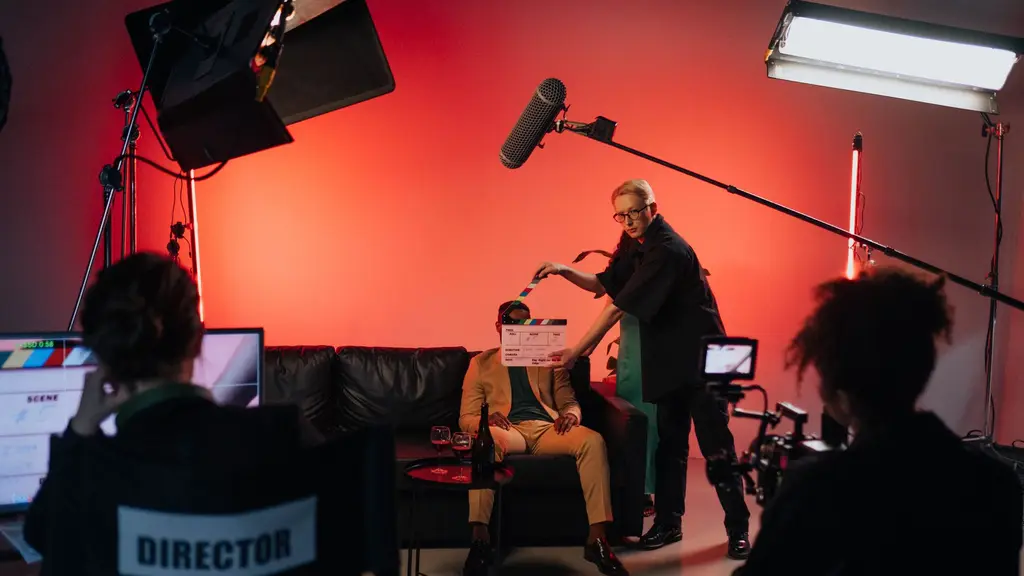
Your relationship with your 1st Assistant Director (1st AD) will determine if you finish on time or if you run out of money. The 1st AD is responsible for the safety of the set and keeping the production on schedule, not you. Do not try to do their job.
If your 1st AD tells you that you have 15 minutes left, believe them. Ignoring the 1st AD’s time management advice often leads to "overtime," which can break an independent production's budget. It costs money to turn the lights on, and it costs more to keep them on past 7:00 PM. If you are behind, cut the shot, not the safety briefing. A dangerous set is a closed set.
The Importance of the Master Shot#
Most new directors make the same mistake: they don't shoot a master. The master shot is the primary take of a scene, usually a wide angle that covers all action, from which coverage is later derived. It is your safety net. If everything else goes wrong, the master allows the scene to exist.
Failure to prioritize the master shot leads to a lack of coverage and the inability to edit the scene effectively. I have seen countless directors try to cut a scene together using only close-ups. It looks jumpy, disjointed, and amateur. You need that wide frame to show where the characters are in space. Without it, you are locked into a series of disconnected faces floating in a void.
Reviewing Dailies: The Director's Feedback Loop#
Dailies are the raw, unedited footage shot during the day. Watching them is painful. You will see every mistake you made, every bad line, and every continuity error. Do it anyway.
If you don't watch your dailies, you are filming blindly. This is when you catch the issues that will ruin your edit. Did the light change in the middle of a sequence? Is the actor’s timing off? Is the performance inconsistent? Use this time to fix the plan for tomorrow. If you see a problem in the dailies, you have to adjust your visual language immediately. If you need inspiration on how to maintain a consistent aesthetic, read up on Denis Villeneuve ⏤ Directing Style and Techniques. His rigor is the standard you should aim for.
Maintaining Continuity on a Budget#
Continuity is the consistency of props, costumes, and actor positioning across different takes. It is the invisible glue of a film. On a low-budget shoot, you rarely have a dedicated script supervisor with a iPad and a printer. You have to be the one keeping track of which hand held the glass or which way the actor was looking.
If you fail at continuity, the audience is pulled out of the story. They stop watching the film and start watching for mistakes. Keep a log. Take photos of the set before and after every setup. If you are shooting out of order—which you always are—continuity is the only thing keeping your movie from looking like a collection of random clips.
Scriptory Resource
Tag your script instead of retyping it
Scriptory pulls props, cast and locations straight off the page, so you never lose track of what you need.
The Director's Cut vs. The Final Cut#
The "Director's Cut" is the version of the film that represents your creative vision before studio or producer interference. It is the version you fought for. But remember: the Director's Cut is a process, not a trophy.
Steven Spielberg’s Saving Private Ryan revolutionized war filmmaking through the use of handheld cameras and desaturated color to mimic newsreel footage. He didn't achieve that by being precious about his footage. He achieved it by understanding what the story required and then editing ruthlessly to achieve that effect. You will have to cut scenes you love. You will have to kill your darlings. If a scene doesn't move the story forward, it is dead weight.
Conclusion: Scaling Your Vision#
Directing is a series of trade-offs. You trade time for quality, money for speed, and sleep for the shot. No one will ever care about your film as much as you do, which means you are the only one who can make sure it actually gets made.
Start by locking your script. Then build a schedule that doesn't rely on miracles. Communicate the visual language to your Cinematographer before the first day, so you aren't arguing about the look when you should be shooting. You have the tools, the tech, and the story. Now, go handle the logistics. The rest is just a matter of showing up and making the hard choice when the sun starts to set.
Frequently Asked Questions
Quick answers to what people ask about this topic.
What is the difference between a Director and a Producer?
The Director is primarily responsible for the creative vision, including performance and visual style, while the Producer manages the business, budget, and logistics of the production. While they collaborate closely, the Producer ensures the project is financially viable and on schedule, whereas the Director ensures the final product matches the intended artistic goal.
How many pages should I shoot in a day?
For independent productions, a realistic goal is 3 to 5 pages per day. Complex scenes with stunts, heavy dialogue, or multiple locations will require more time, potentially reducing the page count to 1 or 2 pages. Always consult with your 1st AD to create a realistic schedule based on your specific script requirements.
What is a shot list and why do I need one?
A shot list is a detailed document that outlines every camera angle, lens choice, and movement required for each scene. It is essential because it keeps the crew organized, prevents wasted time on set, and ensures you capture all the necessary coverage to edit the scene together effectively.
How do I start directing actors?
Directing actors begins with clear communication of the character's motivation and the scene's emotional objective. Instead of telling actors how to move, explain what the character wants and how they feel. This allows the actor to internalize the performance, leading to more authentic and natural results on camera.
Filed Under
Format your script for free
Stop fighting Word margins. Scriptory formats your screenplay to industry standard as you type, then turns it into a breakdown, a schedule and a call sheet.
Open Scriptory Now