Key Takeaways
- The cinematic landscape of 2013 was heavily shaped by the lingering economic anxiety and financial fallout of the Great Recession.
- Frozen won the Academy Award for Best Animated Feature and cemented Disney's modern musical renaissance.
- Spike Jonze's Her won the Academy Award for Best Original Screenplay by exploring technological isolation through a deeply human lens.
- Prisoners maintains an unbroken psychological tension over its demanding 153-minute runtime through meticulous pacing and framing.
- Blue Is the Warmest Colour made history at the 2013 Cannes Film Festival by winning the prestigious Palme d'Or.
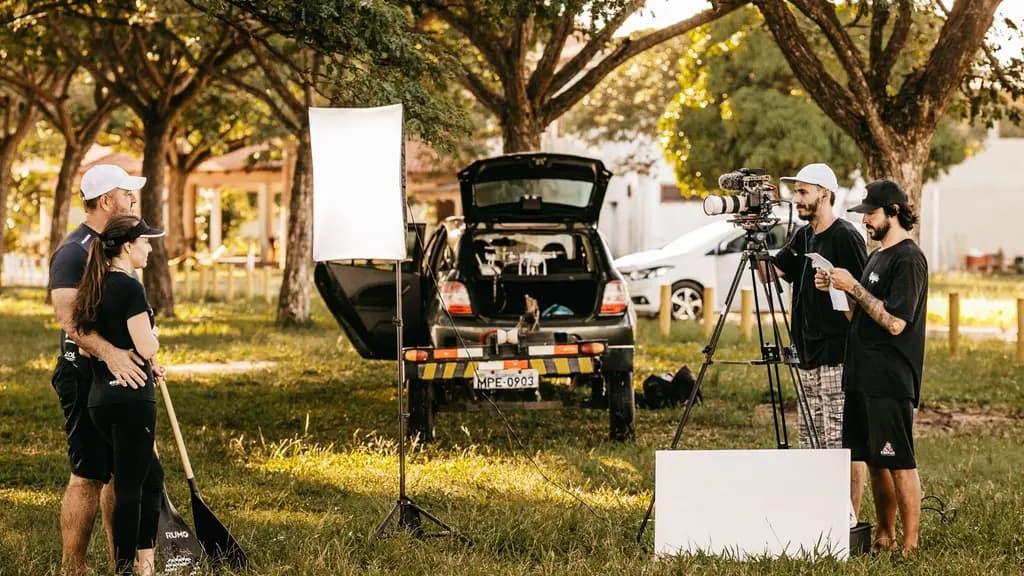
If you spent 2013 on a truck or huddled over a DIT station, you remember the exhaustion. The whole industry was shaking off a financial collapse that had dried up traditional slate financing, forcing producers to pinch pennies while studio executives demanded high-concept safety nets. You felt that squeeze in every pre-production meeting where the line producer stared at a spreadsheet and quietly crossed out your second day of exterior work.
That post-recession financial anxiety didn't just break budgets; it secretly shaped the creative DNA of the entire release calendar. Blockbusters leaned hard into themes of systemic corruption and survival, while indie filmmakers traded gloss for gritty, ground-level realism that felt uncomfortably close to home. When you look back at that specific twelve-month stretch, you are not just looking at a random assortment of titles. You are looking at a masterclass in making art when the bottom has just fallen out of the economy.
1. Introduction: Economic Anxiety and the Cinema of 2013#
Look closely at the slate and you will spot the thread immediately. Characters across every budget tier were worried about rent, debt, and basic survival. The economic downturn from the Great Recession cast a long, stubborn shadow over sets from Los Angeles to New York. If you were a protagonist that year, chances were high that you were staring down an eviction notice or working a dead-end job that barely kept the lights on.
This environment forced a fascinating creative split. Studios pumped money into escapist spectacles that addressed societal collapse through allegory, while independent productions used stark cinematography and handheld cameras to document the grinding daily cost of being broke. You could not walk onto a set without feeling the industry’s collective realization that easy money was gone. What emerged from that scarcity was a hardened, hyper-focused style of storytelling that refused to waste a single frame while simultaneously capturing the deep-seated psychological toll of widespread financial instability. Filmmakers had to become extremely resourceful with their locations, often relying on natural light, guerrilla shooting tactics, and favors from local business owners to keep their production costs down. This financial constraint paradoxically liberated directors to take bigger narrative risks, prioritizing raw emotional truth and complex character flaws over expensive visual effects or elaborate set pieces. Consequently, audiences responded enthusiastically to these authentic depictions of struggle, creating a massive cultural appetite for stories that mirrored their own daily economic anxieties and uncertainty about the future.
2. The Place Beyond the Pines#
Derek Cianfrance took the generational fallout of blue-collar poverty and turned it into a three-act architectural tragedy. When Luke, played by Ryan Gosling with a bleached-blonde mop and face tattoos, starts knocking over banks to support a child he barely knows, you are watching the direct economic desperation of a country that had run out of safety nets.
The production logistics were brutal. Cianfrance shot on location in Schenectady, New York, dealing with unpredictable weather and tight turnarounds that would give any first-ad an ulcer. The film argues that choices made in desperation echo down through families like a bad gene. It avoids easy moralizing, choosing instead to show you the exact mechanical gears of the American penal and economic systems grinding young men into dust.
3. Frances Ha#
Noah Baumbach and Greta Gerwig captured the precise, humiliating economics of trying to live in New York City on zero dollars. Shot in crisp black-and-white, the film follows Frances as she bounces from one sublet to another, pretending she is a dancer while actually just trying to figure out how to pay her phone bill.
Gerwig’s performance relies on physical comedy that masks a deep, terrifying professional instability. Every time Frances looks at an apartment she cannot afford or tries to explain her vague career path at a dinner party, you feel the specific dread of every twenty-something who graduated into a stalled job market. The monochrome palette isn't just an aesthetic affectation; it strips away the noise and leaves you with the bare, stark reality of youthful stagnation.
4. Frozen#
Dismissing this cultural juggernaut as mere children's entertainment is a severe mistake. Released by Walt Disney Animation Studios and directed by Chris Buck and Jennifer Lee, the film won the Academy Award for Best Animated Feature and Best Original Song. Beneath the ice castles and reindeer lies a sharp pivot in modern studio animation: pairing classic fairy-tale structures with contemporary, song-driven narratives that completely dominated global culture.
Disney realized that audiences wanted stories about isolation, familial duty, and breaking free from inherited burdens. The production pipeline required massive computational power to render complex snow simulations, pushing technical boundaries while delivering a narrative about self-reliance that resonated deeply with a generation feeling boxed in by circumstance.
5. Short Term 12#
Destin Daniel Cretton shot this micro-budget indie in just twenty days, and every frame vibrates with the raw energy of a crew running on black coffee and sheer willpower. Set in a foster care facility, the film follows Grace, a supervisor played by Brie Larson, as she tries to manage emotionally volatile kids while her own life quietly unravels.
The film launched the careers of LaKeith Stanfield, Rami Malek, and Stephanie Beatriz precisely because the writing gave them room to breathe. There are no expensive pyrotechnics here, just tight interior locations, handheld cameras, and dialogue that hits you in the chest. It reminds you that you do not need a million-dollar lighting package to make an audience hold their breath; you just need actors who understand the stakes of the room.
6. Mud#
Jeff Nichols took the classic Twain-esque coming-of-age template and dragged it straight into the modern American South. When two young boys stumble upon a fugitive hiding out on an island in the Mississippi River, they get roped into a messy romantic rescue mission that tests everything they think they know about adults.
Matthew McConaughey delivers a muted, weathered performance as the titular fugitive, proving that his career reinvention was built on serious, grounded character work. The production used real Arkansas locations, shooting in the stifling humidity and swamp muck that define the region. The visual design leans heavily into natural light and drone-free, patient camera setups that let the landscape tell as much of the story as the actors do.
7. Blackfish#
Gabriela Cowperthwaite’s documentary plays with the pacing and dread of a psychological thriller. By tracking the life of Tilikum, a captive killer whale at SeaWorld, and examining the fatal consequences of industrial animal confinement, the film achieved something vanishingly rare for nonfiction cinema: it forced immediate, tangible corporate and cultural change.
As documentarians know, the hardest part of the job is shaping hundreds of hours of archival footage and interviews into a coherent narrative arc without losing the audience's trust. Blackfish succeeds by letting the facts speak with brutal clarity. It stands as a stark reminder that the camera can be an investigative weapon, dismantling PR machines with nothing more than witness testimony and court records.
8. You’re Next#
Adam Wingard took the tired home invasion sub-genre and systematically dismantled every predictable trope in the book. When a family reunion at a secluded weekend estate gets interrupted by animal-masked assassins, the audience settles in for standard slasher fare—until the prey turns out to be exceptionally well-equipped to fight back.
Working with a tight budget and a single primary location, the production relied on smart blocking and practical gore effects rather than expensive digital trickery. The humor cuts through the tension without ever defusing it, proving that you can subvert a worn-out genre if your script respects the audience enough to keep them guessing until the final cut to black.
9. Fruitvale Station#
Ryan Coogler’s feature debut is an unyielding look at the final twenty-four hours in the life of Oscar Grant before he was killed by transit police at an Oakland subway station. Michael B. Jordan anchors the film with a performance that refuses to turn Grant into a saint or a statistic, rendering him as a messy, complicated, fully realized human being trying to do right by his family.
Shot on Super 16mm film, the texture of the cinematography gives the narrative an immediate, documentary-like intimacy. You watch ordinary interactions—buying groceries, arguing with an ex, playing with a daughter—knowing exactly how the clock runs out. It is a masterclass in building inescapable tragic momentum out of the mundane details of everyday life.
10. Before Midnight#
Richard Linklater completed his generational romance trilogy by dragging Jesse and Céline out of the romantic European fantasy and dropping them into the messy, exhausting reality of middle-aged domesticity. Set over the course of a single afternoon and evening in Greece, the film captures the slow erosion of youthful idealism under the weight of mortgages, ex-spouses, and career compromises.
The script, co-written by Linklater, Ethan Hawke, and Julie Delpy, relies on extraordinarily long, uninterrupted dialogue takes that demand total immersion from both the actors and the camera operators. There are no quick cuts to hide a dropped line or a flat beat. You are trapped in the room with two people who love each other dearly but are running out of patience for each other's compromises.
11. The World’s End#
Edgar Wright wrapped up his Cornetto trilogy with a sci-fi comedy that doubles as a devastating portrait of small-town stagnation and severe alcoholism. Simon Pegg plays Gary King, a washed-up addict who drags his reluctant, successful childhood friends back to their hometown for an epic pub crawl, only to discover that the locals have been replaced by alien clones.
The fight choreography and rapid-fire montage editing are staggering in their technical precision. Wright uses whip pans, crash Zooms, and rhythmic sound design to turn a drunken brawl in a bathroom into high art. Beneath the alien invasion comedy, the film asks a brutal question: what do you do when the person you used to be is the only version of yourself you actually liked?
12. Inside Llewyn Davis#
Joel and Ethan Coen turned the early 1960s Greenwich Village folk scene into a circular purgatory for struggling artists. The film follows a week in the life of Llewyn Davis, a brilliant folk singer who sleeps on couches, loses his friends' cat, and fails to catch a break in an industry that has no use for bitter purists.
Bruno Delbonnel’s cinematography washes New York in a desaturated, freezing winter palette that makes every outdoor scene feel like an uphill trudge through slush. The music, supervised by T Bone Burnett, is performed live on set rather than dubbed later in post-production, giving the acoustic numbers an authentic, hollow-room resonance. For anyone who has ever poured their life into creative work only to watch it bounce off a brick wall, this film feels less like entertainment and more like an x-ray.
Breaking down an indie production schedule
- 1
Secure the location first
Never cast actors until you have a signed lease.
- 2
Build the strip board
Group scenes by lighting setup, not chronology.
- 3
Lock the page count
Every extra page costs two hours of crew overtime.
13. The Wolf of Wall Street#
Martin Scorsese’s three-hour descent into boiler-room capitalism moves with a manic, cocaine-fueled energy that exhausts the viewer by design. Leonardo DiCaprio plays Jordan Belfort with terrifying charisma, selling worthless penny stocks to unsuspecting investors while burning through mountains of cash and narcotics.
The film relies heavily on fourth-wall-breaking direct address and rapid editing to pull the audience directly into the fever dream of unbridled greed. The common mistake is misreading the film as an endorsement of Belfort's lifestyle rather than a satirical takedown of it. Scorsese and editor Thelma Schoonmaker construct a cinematic trap: they make the excess look so thrilling that by the time the legal hammer drops, you feel complicit in the rot.
14. Blue Is the Warmest Colour#
Abdellatif Kechiche took the Palme d'Or at Cannes with an uncompromising, three-hour chronicle of a young woman discovering her sexuality through a consuming, volatile first love. Adèle Exarchopoulos and Léa Seydoux deliver performances of such raw, unguarded vulnerability that the camera feels less like an observer and more like an intruder.
The production was notoriously grueling, with months of rehearsal and countless takes stretching crew endurance to the absolute limit. Yet the resulting film strips away conventional romantic tropes to show the permanent scar tissue left behind by our first great heartbreak. It is messy, indulgent, and entirely uninterested in polite cinematic convention.
15. Stoker#
Park Chan-wook stepped into English-language filmmaking with a Gothic psychological thriller that drips with Hitchcockian dread. When a mysterious uncle arrives at the home of a grieving mother and her emotionally detached daughter following a fatal car crash, the house becomes a pressure cooker of repressed desire and calculated violence.
Every frame is an exercise in meticulous visual composition. Chung Chung-hoon’s cinematography uses graphic matches and hyper-stylized framing—a strand of hair turning into tall grass, a piano key bleeding into a hallway—to map the inner psychology of its characters. It is a reminder of what happens when a director with a distinct visual signature is given total control over every department head on set.
16. Nebraska#
Alexander Payne shot Nebraska in gorgeous black-and-white widescreen, capturing the quiet dignity and stubborn pride of the American Midwest. The story follows an aging, alcoholic father who is convinced he has won a million-dollar sweepstakes from a junk mail flyer, and the son who reluctantly drives him across state lines to claim it.
Bruce Dern’s weathered face and laconic delivery ground a narrative that could easily have slipped into caricature. Payne lets scenes play out in wide shots, giving the flat landscapes and small-town bars room to breathe. It captures post-recession economic reality without cynicism, finding genuine humor and melancholy in families trying to connect across generations of unspoken disappointment.
17. Spring Breakers#
Harmony Korine took the neon-drenched iconography of college party culture and turned it into a surreal, pop-art fever dream about consumerist nihilism. Four college girls rob a fast-food joint to fund their spring break trip down to Florida, where they fall into the orbit of Alien, a grill-wearing, gun-toting local drug dealer played by James Franco with bizarre, unsettling glee.
Aided by cinematographer Benoît Debie, Korine uses saturated colors, looping narrative structures, and hypnotic recurring voiceovers to create an audio-visual trip that defies traditional narrative logic. It treats contemporary youth culture not with moral panic, but as a bizarre religion born out of MTV, social media, and total economic disillusionment.
18. Her#
Spike Jonze crafted a futuristic romance that feels remarkably grounded in contemporary melancholy. Set in a warm, muted Los Angeles, the film follows a lonely man going through a painful divorce who falls in love with Samantha, an advanced artificial intelligence operating system voiced by Scarlett Johansson.
high-waisted trousers and retro handheld console are tagged.
THEODOREI'm just not sure how to feel about it.
In Scriptory: Script Breakdown
Tag props, cast, costume, vehicles, stunts and SFX on the page itself, then read them back grouped by department and by scene.
Where: Editor — Breakdown tab
Jonze and production designer K.K. Barrett stripped Los Angeles of its gritty edges, opting for a soft, pastel-toned future where people walk around in high-waisted trousers and stare into pocket devices. The visual design makes the isolation of modern city life tangible, proving that science fiction does not need dark alleys and flying cars to examine what it means to be human in a disconnected world.
19. Prisoners#
Denis Villeneuve maintained an unbearable level of psychological tension across a demanding 153-minute runtime without ever falling back on standard action-movie shortcuts. When two young girls go missing in a Pennsylvania suburb, a desperate father takes matters into his own hands while a meticulous detective hunts for clues in the pouring rain.
Roger Deakins’ cinematography uses endless gray skies, shadows, and dim interiors to make you feel the damp, freezing panic of a parent living through a nightmare. The pacing requires immense discipline from both the director and editor Joel Cox; every scene is stretched to its absolute breaking point, forcing the audience to sit in the suffocating ambiguity of moral compromise.
20. Gravity#
Alfonso Cuarón pushed the technical boundaries of modern filmmaking with a visceral survival story set entirely in the hostile vacuum of low Earth orbit. Sandra Bullock plays Dr. Ryan Stone, a medical engineer on her first space shuttle mission when sudden orbital debris destroys her ship, leaving her stranded and completely cut off from mission control.
The visual effects and long-take cinematography orchestrated by Emmanuel Lubezki redefined how space is represented on screen, utilizing groundbreaking LED lighting rigs and robotic camera arms to simulate true weightlessness. Beneath the breathtaking technical marvel lies a deeply intimate story about grief, resilience, and the sheer biological will to keep breathing when everything you have ever known has been violently stripped away from you in an instant.
Scriptory Resource
Tag your script instead of retyping it
Scriptory pulls props, cast and locations straight off the page.
If you are prepping a gritty indie or trying to wrangle a complex schedule right now, stop doing line items by hand. Open your project, let the software pull your cast and set lists straight off the page, and get back to making your movie before the light dies.
Frequently Asked Questions
Quick answers to what people ask about this topic.
What was the best movie of 2013?
While critical consensus varies, top-ranked films of 2013 include Spike Jonze's 'Her', Martin Scorsese's 'The Wolf of Wall Street', and the Palme d'Or winner 'Blue Is the Warmest Colour'. These films dominated major film critic awards and continue to define the cinematic identity of the early 2010s.
Which animated movie came out in 2013 and won an Oscar?
Disney's 'Frozen' was released in 2013 and won the Academy Award for Best Animated Feature, alongside winning Best Original Song for 'Let It Go'. The film revolutionized modern studio animation workflows and cultural reach.
What indie movies launched careers in 2013?
Destin Daniel Cretton's 'Short Term 12' (2013) is widely noted for launching or elevating the careers of major contemporary actors including Brie Larson, LaKeith Stanfield, Rami Malek, and Stephanie Beatriz, all within a gritty foster-care facility setting.
Did Martin Scorsese release a movie in 2013?
Yes, Martin Scorsese released 'The Wolf of Wall Street' in late 2013. Starring Leonardo DiCaprio as stockbroker Jordan Belfort, the three-hour dark comedy-drama became one of the year's most financially successful and culturally debated films.
Format your script for free
Stop fighting Word margins. Scriptory formats your screenplay to industry standard as you type, then turns it into a breakdown, a schedule and a call sheet.
Open Scriptory Now