Key Takeaways
- Great company culture videos replace upper management talking points with honest, personal employee stories.
- Intentional transitions prevent corporate recruitment videos from feeling like a series of jagged cuts between scattered topics.
- Pairing employee talking head interviews with B-roll footage creates a more dynamic and visual viewer experience.
- Infusing humor or retro stylistic choices into human resources content helps a corporate video stand out to prospective talent.
- Highlighting specific, actionable core values prevents recruitment marketing from relying entirely on generic office perks.
You spent three hours in a stale conference room listening to a senior vice president explain how much he values work-life balance. Then you walked past his desk at 7:00 PM and saw him glaring at an Excel sheet while eating cold takeout. That disconnect is why ninety percent of corporate recruitment videos end up in the digital trash bin. If your audience smells upper management talking points from the first frame, you have lost them.
You need something real. A company culture video only works when it captures actual employee stories and specific operational values through structured pre-production rather than wishful thinking from the C-suite. Before you ever touch a camera package or open a 10 Production Design Tips For Filmmakers on a Budget guide, you have to decide whose reality you are actually filming.
Let us examine how to build a recruitment piece that does not make your viewers cringe.
Great Videos Tell Great Stories#
Most internal videos project what executives wish the company was rather than how average employees experience the floor every day. You will get handed a pre-approved narrative about synergy and growth. Ignore it. Find the person who has been there three years and knows where the coffee maker leaks.
Starbucks builds recruitment videos around grounded point-of-view narratives from real baristas and shift supervisors. They do not talk about global market dominance. They talk about taking time off to go on a road trip with a daughter or picking up a shift to help a coworker. That specificity is what connects with a viewer who is trying to figure out if your workplace is miserable.
Before you roll tape, run a proper location tech scout. Send a producer ahead of time to find the quiet corners, the harsh fluorescent overheads, and the spots where people actually talk to each other. Store those notes alongside your stripboard and call sheet so your crew is not wandering around a fifty-thousand-square-foot warehouse blind. When you are filming in a high-noise environment like an active fulfillment center or a busy software development pit, the acoustic challenges will completely derail your audio capture if you do not plan ahead. You need to identify HVAC rumble, forklift backup beeps, and echoing hallways before your sound mixer shows up with a boom pole and panics.
Bring a dedicated dual-system sound rig featuring a Sennheiser MKH 416 shotgun microphone paired with Sanken COS-11D lavaliers for every single on-camera subject. If you rely on the built-in camera preamps while shooting near industrial cooling units, your dialogue will sound like it was recorded inside a wind tunnel. Mandate that your crew capture at least ten minutes of clean room tone at every single interview setup. Your dialogue editor will thank you during the final mix down in Pro Tools or DaVinci Resolve Fairlight.
Beyond audio, look closely at the lighting conditions in every corner of the facility. Offices often feature horrible mixed-temperature lighting, combining green-tinted fluorescent tubes with harsh daylight spilling through massive glass windows. Bring portable LED fixtures like Litepanels Astra or Aputure 600d units to overpower the ambient ugliness and maintain color consistency across wide shots and tight cutaways. If you ignore these technical realities during your initial scout, your post-production team will spend weeks trying to color-correct muddy footage and scrub out terrible electrical hums.
Pre-production pipeline for authentic stories
- 1
Scout the floor
Walk the actual workspace without management present.
- 2
Interview off-camera
Talk to line staff before picking interview subjects.
- 3
Lock the beats
Build a loose timeline of their actual work week.
Slick Transitions Make Video Pop#
A corporate culture video has to cover a ridiculous amount of ground in two minutes. You are jumping from healthcare plan details to remote work policies to what kind of snacks live in the breakroom. Without intentional transitions, your edit turns into a jagged series of disconnected jolts that exhausts the viewer.
BambooHR solved this by using still photographs and graphic wipes to bridge disparate topics. You move from a conversation about dental coverage straight into work-life balance without feeling like you just hit a brick wall. It creates a natural flow between heavy corporate policy and human reality.
If you shoot these transitions as part of your initial production calendar, you save your editor from having to bury bad pacing under generic stock music. Treat the graphic elements as actual scenes in your breakdown rather than post-production band-aids.
Think about how you move from a serious discussion regarding 401k matching to a lighthearted segment about Friday afternoon ping-pong tournaments. If you cut abruptly from a somber talking head in a windowless HR office to a screaming sales floor, the whiplash breaks the viewer's psychological immersion. Instead, utilize clever match cuts or graphic overlays designed in Adobe After Effects or Maxon Cinema 4D that visually tie the two spaces together.
For instance, you can track a graphic line from a spreadsheet onscreen directly into the edge of a monitor in the next scene, creating a clean visual bridge. This level of intentionality requires storyboarding your edit long before you ever launch your editing timeline. When your director of photography and your offline editor collaborate during the scriptwriting phase, you eliminate wasted coverage and ensure that every transition feels motivated.
Never leave these critical connective tissues to chance in the editing bay. If you wait until post-production to figure out how to stitch your disparate scenes together, you will inevitably rely on cheesy star wipes, jarring whip pans, or lazy cross-dissolves that scream amateur hour. Plan your motion graphics packages early, test them against your rough cut assembly, and make sure your colorist grades the transition elements to match the native look of your production camera package.
Do
When you are deep in the trenches of assembling a complex recruitment piece, keeping track of every single property, actor, and location across dozens of separate pages can quickly become an organizational nightmare. Instead of constantly flipping back through messy paper folders or messy digital documents, modern video production workflows rely on dedicated script breakdown software to parse text automatically and generate itemized lists instantly.
Having these vital production elements organized right at your fingertips means you never have to guess about wardrobe changes, proprietary props, or specialized lighting equipment during a chaotic shoot day. Your line producer will appreciate the instant clarity, and your camera crew will waste less time hunting down gear in the middle of a tight production schedule.
Avoid
Use Talking Heads and Voice Over#
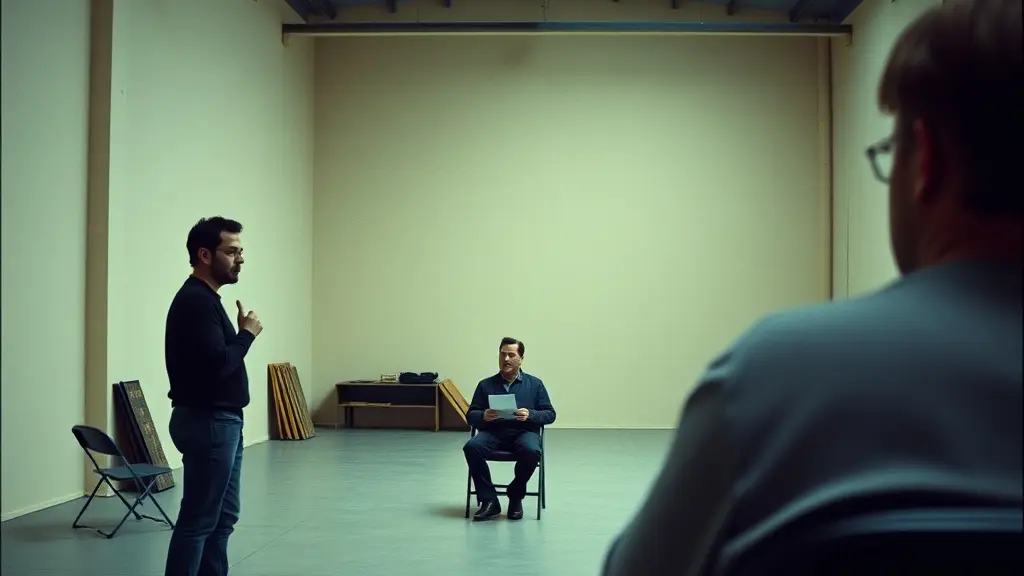
You cannot make a recruitment video without employee interviews. People watching want to see human faces they might actually work next to. But static talking heads shot against a beige office wall will drain the life out of your runtime faster than a three-hour budget meeting.
Apple avoids this visual monotony by pairing employee interviews with rolling B-roll of the actual manufacturing machines and internal technology powering the company. You hear a designer talk about precision while the camera tracks across a robotic arm milling aluminum.
Never leave your interviewee stranded on screen for forty seconds straight. Cut away to their hands, their workspace, or the tools they use every day. Use their voice over to drive the visual narrative while the camera explores the environment.
When you sit an employee down for an interview, they are almost always nervous. Their shoulders hunch up, their breathing becomes shallow, and their voice takes on a stiff, robotic cadence. To break through this corporate defense mechanism, you need an interviewer who can hold a genuine conversation rather than reading robotically from a clipboard of legal prompts. Spend the first ten minutes talking about anything other than work. Ask them about their weekend, their dogs, or that terrible commute on the freeway.
Once they relax and start speaking with their natural conversational rhythm, slowly transition into the core interview questions without cutting the rolling cameras. Capture multiple angles by deploying a dual-camera setup featuring matched cinema cameras like the Sony FX6 or Canon C70. You want an A-camera locked on a tight medium shot while the B-camera tracks slightly wider or pushes in on a slider for subtle kinetic energy.
When you cut back to the interview footage later in Premiere Pro or Final Cut Pro, you can easily mask any stuttering or filler words by jumping between the two camera angles without introducing ugly jump cuts. Layer their unfiltered voice over clean, beautifully composed B-roll of their actual daily environment. Show them collaborating over a whiteboard, debugging a complex server rack, or laughing with teammates over lunch in the cafeteria. This juxtaposition of raw, authentic dialogue with high-end cinematic visuals is what separates a world-class employer brand video from an uninspired corporate snoozefest.
Best Videos Have Heart#
If your video lacks heart, every single second drags like a four-hour setup on a night exterior. Heart does not mean a tear-jerking orchestral swell over shots of people typing spreadsheets. It means showing why the people in the building care about the work they finish before five o'clock.
Take the recruitment work done by specialized public sector departments, like the UCLA Police Department. Their messaging works because it leans entirely into mission and public service rather than generic workplace perks. They show the actual weight of the job through carefully placed text and grounded moments.
When you draft your interview questions, skip the questions about free snacks and open floor plans. Ask people what problem they solved this week that actually mattered to a customer. That is where the pulse of the company lives.
Heart is notoriously difficult to manufacture on demand. If you walk onto a factory floor or a software startup with a camera crew and demand that people look inspired, they will look like hostages reading ransom notes. You have to find the genuine sparks of humanity that already exist beneath the surface of the organization. Talk to the customer support lead who spent three hours helping a distraught small business owner recover a lost database. Talk to the software engineer who stayed late to patch a security vulnerability before it compromised patient data.
Those are the stories that matter. When you construct your narrative arc, give these everyday heroes the space to explain the stakes of their work in their own imperfect, stumbling words. Do not script their answers. Do not feed them polished marketing buzzwords about changing the world or disrupting industries. Let them talk about the tangible impact they make on real human beings every single day.
When viewers see an employee look directly into the lens and describe a difficult problem they solved because they genuinely cared about the outcome, empathy takes over. That emotional resonance bypasses the cynical defenses every candidate brings to the table when evaluating a new job opportunity.
Company Videos are Funny#
Human resources content is almost universally treated like a root canal. It is stiff, overly legalistic, and terrified of making a mistake. That fear is precisely why nobody remembers your corporate video ten minutes after they close the tab.
Twitter leaned hard into self-referential comedy and retro 1980s graphics for their HR recruitment pieces. They cut mid-sentence from human resources staff members to deliver deadpan jokes about how much they love the job. It works because it drops the corporate armor entirely.
You can be goofy without losing your brand identity. In fact, a little bit of self-deprecation proves to prospective hires that your management team has a sense of humor about the daily chaos of office life.
Humor is a dangerous weapon in corporate video production because a bad joke lands like a wet thud and alienates your audience instantly. However, playing it entirely safe guarantees total irrelevance. To pull off comedy in a corporate culture video, you have to lean into observational truth rather than forced sketch comedy routines. Make fun of the things everyone in the office already complains about in private Slack channels. Mock the endless cycle of alignment meetings, the mysterious disappearance of good pens from the supply closet, or the eternal debate over office thermostat temperatures.
When leadership is willing to laugh at their own bureaucratic quirks, it signals a healthy, low-ego workplace culture that confident candidates find irresistible.
Work with your copywriters to punch up your interview prompts and voice-over scripts during the pre-production phase. Write punchlines that land naturally within the flow of conversation rather than feeling tacked on by an insecure marketing committee. If your CEO is willing to appear in a quick, self-deprecating gag at the start of the piece, you immediately disarm the audience and prove that the organization does not take itself too seriously. Just remember to keep the pacing tight. Comedy dies a slow death when a joke is allowed to linger on screen for three seconds too long.
Test the jokes on outsiders
Effective Videos Have Songs#
If you want an internal culture video to stick in someone's head for a week, give them a rhythm they can tap their foot to. Zappos famously featured employee-led musical performances and custom jingles in their engagement videos to explain company culture in under two minutes.
Pulling off a musical number requires vastly more prep than pointing a tripod at a manager in a conference room. You need a dedicated production calendar that accounts for lyric brainstorming, audio recording days, and rehearsal blocks before the cameras ever roll on the warehouse floor.
Scriptory Resource
Tag your script instead of retyping it
Scriptory pulls props, cast and locations straight off the page.
If you treat the song as a standard music video production, you can map out every cue and participant location down to the minute. If you wing it on the day, you will waste four hours trying to get thirty accountants to clap on the same beat.
Music is the invisible glue that holds a fast-paced corporate video together, dictating the emotional arc and pacing of every single cut. When you commission a custom track or license commercial-grade production music from platforms like Musicbed or Artlist, you must evaluate how the tempo interacts with your visual editing rhythm. A sluggish, plodding corporate anthem will flatten even the most dynamic B-roll montage, while an aggressively hyperactive electronic track will make your viewers feel like they just chugged four espressos on an empty stomach.
Work directly with a composer to build a dynamic score that ebbs and flows with the narrative beats of your employee stories. Start with soft, ambient acoustic textures during the vulnerable interview sections, then let the instrumentation build and swell as the video transitions into energetic scenes of teamwork and operational execution.
If you decide to feature employees performing musically on camera, schedule dedicated pre-production rehearsal blocks at least two weeks before your principal photography dates. Amateurs will freeze up instantly when a massive Arri lighting kit is pointed at their faces and a boom operator is hovering inches above their heads. Give them time to practice, build their confidence, and feel comfortable in front of the lens. When the performance finally happens on the day of the shoot, the resulting energy will translate directly through the glass and captivate your target audience.
Great Culture Videos Show Values#
The fastest way to lose a sharp candidate is to list generic perks like ping-pong tables, kombucha on tap, and casual Fridays. Every tech startup in a ten-mile radius offers those exact same things. They are not values; they are table stakes.
HubSpot built its video marketing around specific, actionable core values that dictate how the company actually operates under pressure. Their videos highlight how teams handle disagreements, how feedback is delivered, and what kind of behavior gets rewarded.
Core Value Audit Checklist
0% CompleteWhen you write your interview prompts, force your subjects to talk about a specific time a core value saved a project from going off the rails. That specificity is what separates a genuine cultural portrait from an expensive commercial for a company that does not actually exist.
Stop writing scripts in isolation and start building your shoot around the actual rhythm of your workplace. Open your schedule, map out your locations, and capture the people who make the place run before the schedule falls apart at four o'clock. To ensure your production stays on track, maintain a detailed production binder equipped with contact sheets, gear rental inventories, and contingency schedules for inclement weather or unexpected facility closures. Without this level of meticulous preparation, even the most compelling employee stories will get lost in the chaotic shuffle of an unorganized, frantic shoot day.
Frequently Asked Questions
Quick answers to what people ask about this topic.
What makes a good company culture video?
A good company culture video relies on authentic employee stories, clear core values, and creative visual transitions rather than generic management talking points. By featuring real staff experiences and combining talking head interviews with relevant B-roll footage, businesses can authentically attract new talent and communicate their workplace identity.
How do you plan a corporate recruitment video?
Planning a corporate recruitment video begins with pre-production steps like location tech scouts, employee pre-interviews, and structured scheduling. Using a centralized production calendar helps coordinate team members, equipment, and participants across every phase of filming from script breakdown to final delivery.
Why use talking heads and voice overs in corporate videos?
Using talking heads combined with voice over narration allows a corporate video to establish a speaker while maintaining a dynamic visual experience. Instead of keeping the camera fixed on a single subject, editors can overlay the employee's voice onto relevant workplace footage or machinery.
How can you make HR and corporate videos funny?
Corporate videos can incorporate humor by subverting traditional human resources tropes, utilizing mid-sentence interview cuts, or employing stylized graphics. Adding a lighthearted or self-aware twist to standard workplace information helps create lasting positive memories for prospective employees.
Format your script for free
Stop fighting Word margins. Scriptory formats your screenplay to industry standard as you type, then turns it into a breakdown, a schedule and a call sheet.
Open Scriptory Now